

Everything's Political
Twenty seven Years on and so much is still the same
Last night I embraced my teenage self and went to watch Garbage and Skunk Anansie perform at an outdoor venue (although the camping chairs, picnic and cocktails were definitely provided by forty-four year old Louise). It was a beautiful forest setting populated by a very polite crowd. At different times the lead singers of both bands spoke about community and the importance of looking after each other, both for the duration of the gig and in the wider world. Both explicitly talked about how difficult it is for so many of us to exist in a world that is telling us we don’t belong.
Shirley Manson of Garbage, wore a T-shirt with the slogan ‘Stop Killing Children’ emblazoned on the front. She paused the show to make sure audience members were ok and even went to get ear protection for a young person.
Skin of Skunk Anansie, talked about the links between the various forms of systemic oppression and how they hold each other up in a capitalist system that is trying to control us by fostering hate and division. She invited us to resist, to remember how many of us there are, and to hold onto the hope.
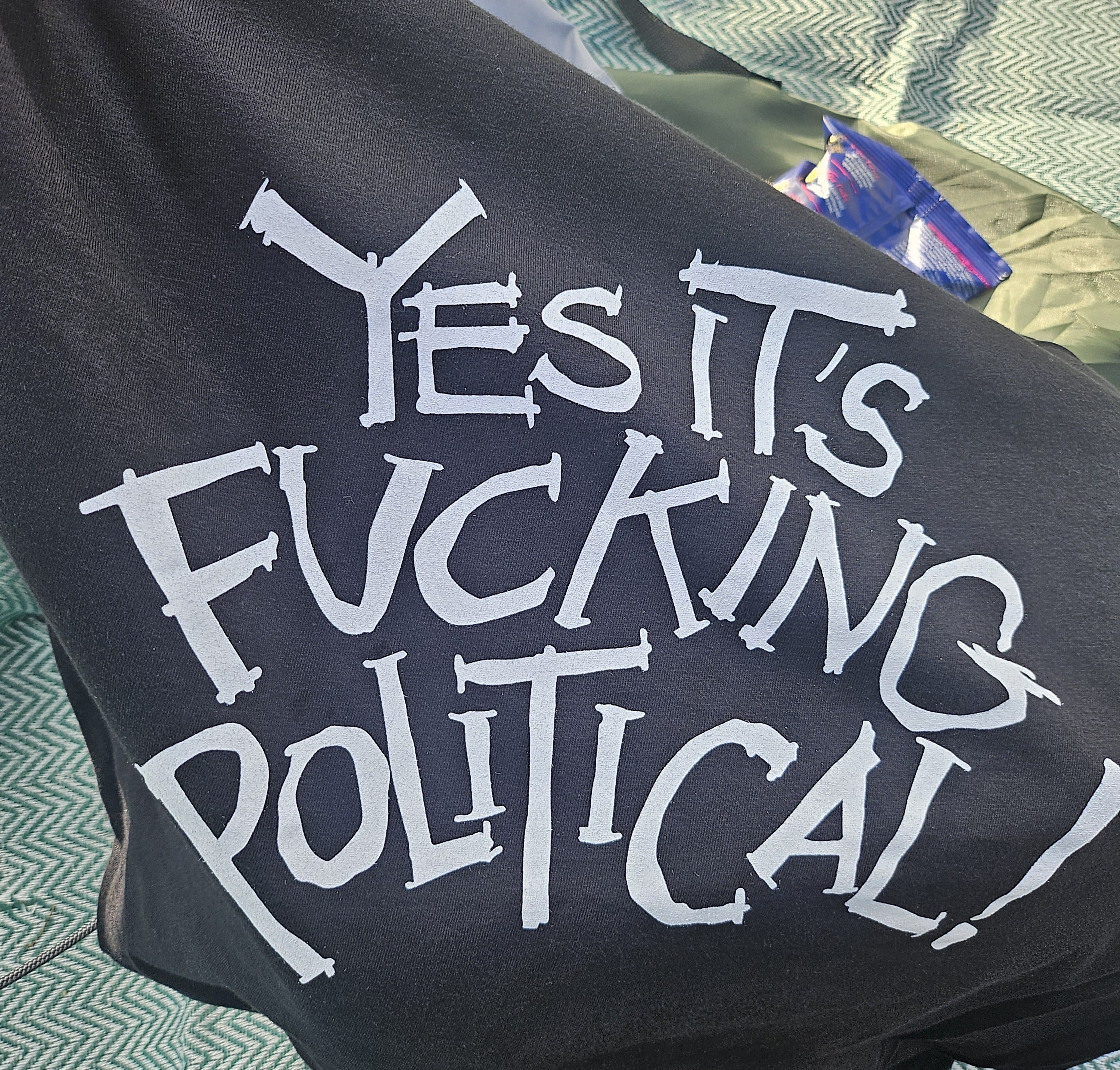
They played the song I had most been hoping to hear, and I joined a forest full of people singing ‘Yes it’s fucking political, everything’s political’ and felt a different kind of overwhelm, than the one I usually associate with gigs of this size. It wasn’t about the noise or the number of people. It was about the feeling of connection, it was about feeling safe in a sea of strangers, it was about knowing that there were people who saw what was happening in the world and recognised the forces driving it forward and who weren’t being taken in by the hateful and divisive ideologies that are so prevalent right now.
The last time I saw Skunk Anansie was twenty-seven years ago when seventeen year old me went to Glastonbury and they headlined the final night. Looking back I can now recognise that I spent most of that weekend dysregulated and in sensory overwhelm. I missed many of the bands I’d planned to see because I just needed to retreat to my tent and nearly left early because of it. Luckily I didn’t, because Skunk Anansie were the best band I saw that weekend.
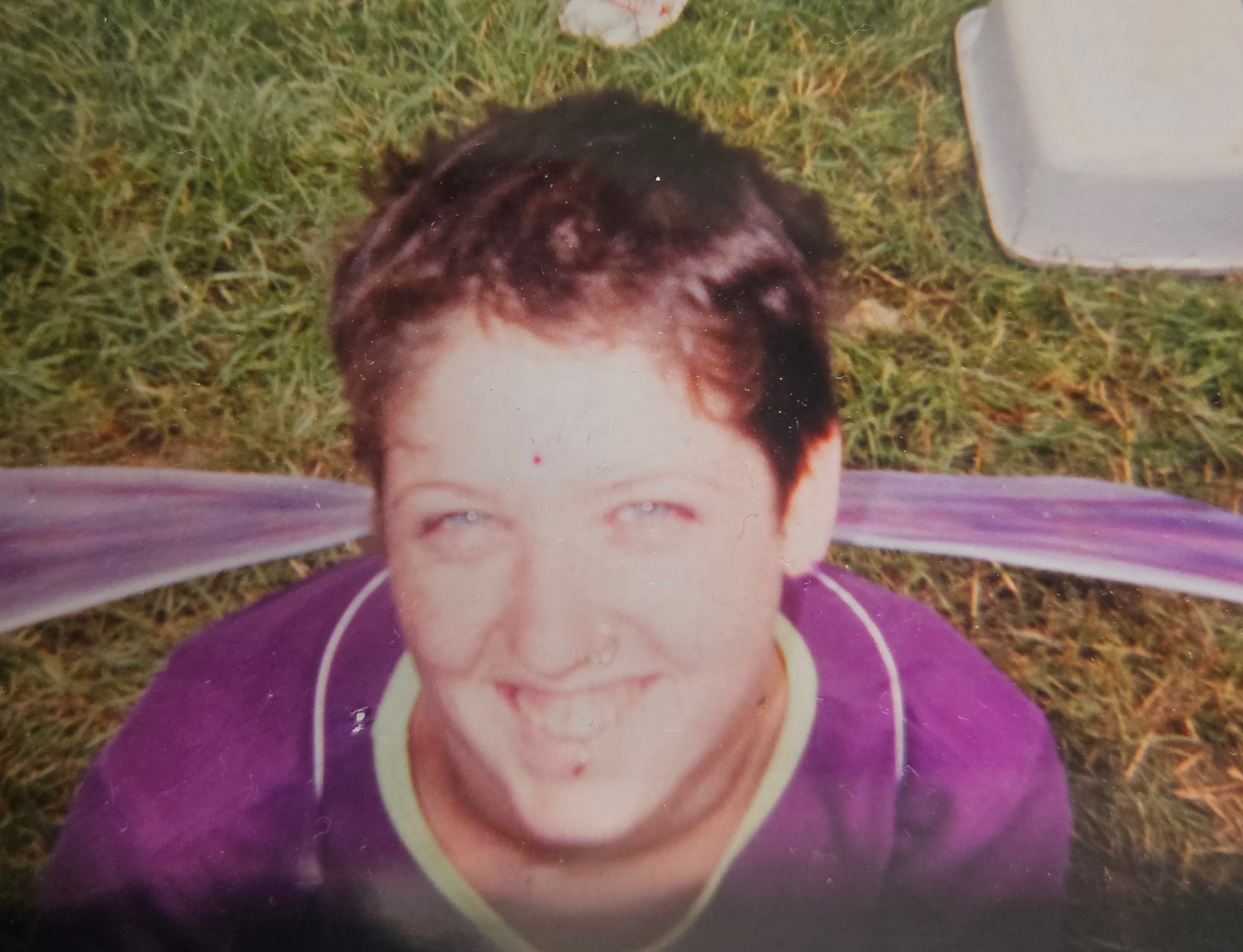
Last night, watching them perform with the same energy and passion, I was taken back to seventeen year old Louise and recognising what else still felt the same, even though the years have brought many changes.
Seventeen year old Louise knew that she probably wasn’t completely straight, and this was in a world where Section 28 was still in effect, the internet wasn’t readily available and any media representation was limited (although Queer as Folk had just been shown). She was just starting to understand who she was by cobbling together piecemeal bits of language and fragments of possibility as she uncovered them. She would be in her late thirties before she felt able to confidently articulate this facet of her identity authentically and safely.
Seventeen year old Louise had no idea she was autistic. She had no idea how hard she was masking (often unsuccessfully), she didn’t understand how her dysregulation showed up, or why so many things seemed harder than they were for others. She wouldn’t come to realise this part of her identity until she was nearly forty and then it would take many years of unlearning and education to figure out what it meant to her. At least this time there was the internet and access to language to support the process.
Seventeen year old Louise, stood in front of the Pyramid stage at Glastonbury listening to Skunk Anansie perform. And despite her overwhelm and dysregulation, she felt seen and connected even without the words to explain it.
Last night, at forty-four years old, standing in a forest singing ‘everything’s political’ at the top of my lungs brought back a slew of memories. Moments where the parts of my identity that were othered meant I was keenly aware of just how political everything really is.
When my wife and I started seeing each other in 2003, Section 28 had just been repealed. Up until that point being in a relationship with another woman was a disciplinary offence in her job in the education field and we didn’t know if it was safe to be open about our relationship.
When we started living together in 2004, the benefit system did not have have space for our relationship and I became a Non-Dependent Adult on the official forms.
When I started a new job, I felt I had to play the pronoun game because I didn’t know if it was safe to be queer there. And if it wasn’t safe, whether the danger would manifest as psychological, physical, financial, or all three.
When we chose to commit to spending our lives with each other there was no recognised way to do it, without leaving the country. Our first wedding was the two of us, making promises and exchanging rings alone.
When we were finally able to get some legal recognition through a civil partnership (which we did in 2006), it was still a novelty at the registry office and we seemed to know more about the process than the officials.
When our daughter needed paperwork signing for school, I was told that I couldn’t do it because they presumed I didn’t have parental responsibility, despite having jumped through the legal hoops to get it.
When my wife needed surgery, they wouldn’t believe she didn’t need a pregnancy test ‘just to be sure’. Or in non-medical settings when people felt it was appropriate to ask explicit questions about my sex life to satisfy their own curiosity.
When we were finally able to get married (which we did in 2015) it was anti-climatic. Ten years after we first committed to spending our lives together we were finally able to tick the married box on our tax returns. By then it didn’t feel like a beautiful moment between two people who loved each other. It felt like a hard won victory tinged with sadness that it had taken the world so long to catch up on what we had been saying for so very long.
It wasn’t a magic wand.
It didn’t stop the hate, or the cis-heteronormative assumptions.
We still risk assess every environment, deciding how much of our lives it was safe to share. Could we acknowledge our relationship, hold hands, say I love you, kiss? At what point might we ‘go too far’ and have to face the backlash.
This passing privilege is luxury that is only open to us because our otherness is not immediately visible.
These moments of my life are not unusual and they don’t just belong to other queer folk. I could share a raft of other moments about existing as a woman, an autistic person or having a chronic illness.
Everyone I know who has a minoritised identity has stories, not just one, multiples. Even the people who don’t think of themselves as minoritised. Even the ones who have internalised the systemic oppression that is rife in our society. Even the ones who are so embedded in the structures of power and control that they don’t recognise how it is impacting them.
We all have stories about the parts of ourselves that it feels unsafe to bring into certain spaces, the parts that we are (implicitly or explicitly) told are not ok.
These are the stories that we are not supposed to share, unless it’s been sanitised.
Because we’re not supposed to make other people uncomfortable by telling the truth about our lived experience.
Because we’re not supposed to expose the systems of oppression and control that are at play in our society.
Because we should be grateful for the scraps of existence we’ve been allowed and should stay in our place.
Except our place is getting smaller, literally and figuratively.
Our rights are being eroded one piece at a time, the places where we can exist without fear are shrinking at an alarming rate. I’ve lost count of the number of people who have dismissed my concerns about losing my rights as a queer person, despite the fact that we are seeing it happen to so many members of our community already.
As Skin stood on the stage last night and said: it won’t stop with trans folk and it won’t stop with queer folk and it won’t stop with black and brown folk.
They’re coming for all of us and the only way forward is together.
So when I stood in the middle of a forest last night singing along with the rest of the crowd I meant every word of it from the bottom of my soul.
Yes it’s fucking political, everything’s political.

If your a practitioner, sign up to my newsletter to be amongst the first to hear about my training and other ways to work with me. You’ll also receive exclusive discount codes and a copy of my guide to key terms in neurodivergence